Vasant Panchami: Invoking the Goddess of Wisdom and the Spirit of Spring
In This Article (Direct Jump)
Quick Information Card
Vasant Panchami
January 24, 2026
February 2, 2025
Magha Shukla Panchami
07:12 AM to 12:34 PM
Goddess Saraswati
North India, West Bengal, Bihar, Punjab
Wisdom, arts, music, and learning
Vasant Panchami
January 24, 2026
February 2, 2025
Magha Shukla Panchami
07:12 AM to 12:34 PM
Goddess Saraswati
North India, West Bengal, Bihar, Punjab
Wisdom, arts, music, and learning
1. Introduction to Vasant Panchami
Vasant Panchami is also called Shri Panchami or Saraswati Panchami. It is a lively Hindu festival celebrated on the fifth day (Panchami) of the bright half (Shukla Paksha) of the month of Magha. It marks the happy arrival of Vasant Ritu, the spring season -- a time known for fresh energy, new life, green fields, and hope and joy. This festival marks nature's shift from the quiet cold of winter to the lively awakening of spring. Most importantly, this day is dedicated to Goddess Saraswati, who represents knowledge, wisdom, music, art, and all learning. Old scriptures say Goddess Saraswati was born on this day, appearing with a bright glow from Lord Brahma's mouth. Her purpose was to give the universe the gifts of speech (Vani), intellect (Buddhi), and wisdom (Gyan), bringing harmony, order, and creativity to all creation. Her arrival is believed to have ended the silence of the early universe, giving beings the power to speak, understand, and create.
2. How to Celebrate Vasant Panchami (Step-by-Step Rituals)
On Vasant Panchami, devotees prepare for worship and often wear bright yellow clothes. This color is not just a custom -- it stands for the blooming mustard fields seen in spring, and for the sun's warmth and the fresh energy of renewal. Across India and in Hindu communities worldwide, temples and homes fill with the sound of prayers, devotional songs, and offerings made to Goddess Saraswati with deep respect. Common offerings include yellow flowers (especially marigold and jasmine), sweet saffron rice (kesar bhat), and other yellow sweets, all offered to the goddess. One important ritual on this day is 'Akshar Abhyasam' or 'Vidya Arambham' -- a ceremony where young children are formally introduced to letters and structured learning for the first time. This shows the strong belief that starting any kind of education or creative work on this day brings Saraswati's special blessings, leading to a bright and knowledgeable future. Artists, musicians, students, and scholars also perform detailed pujas, asking for inspiration, better skill, and sharp focus in their own fields. It is also a respected day to thank gurus and mentors who share their knowledge and guidance, recognizing their important role in shaping our minds and character.
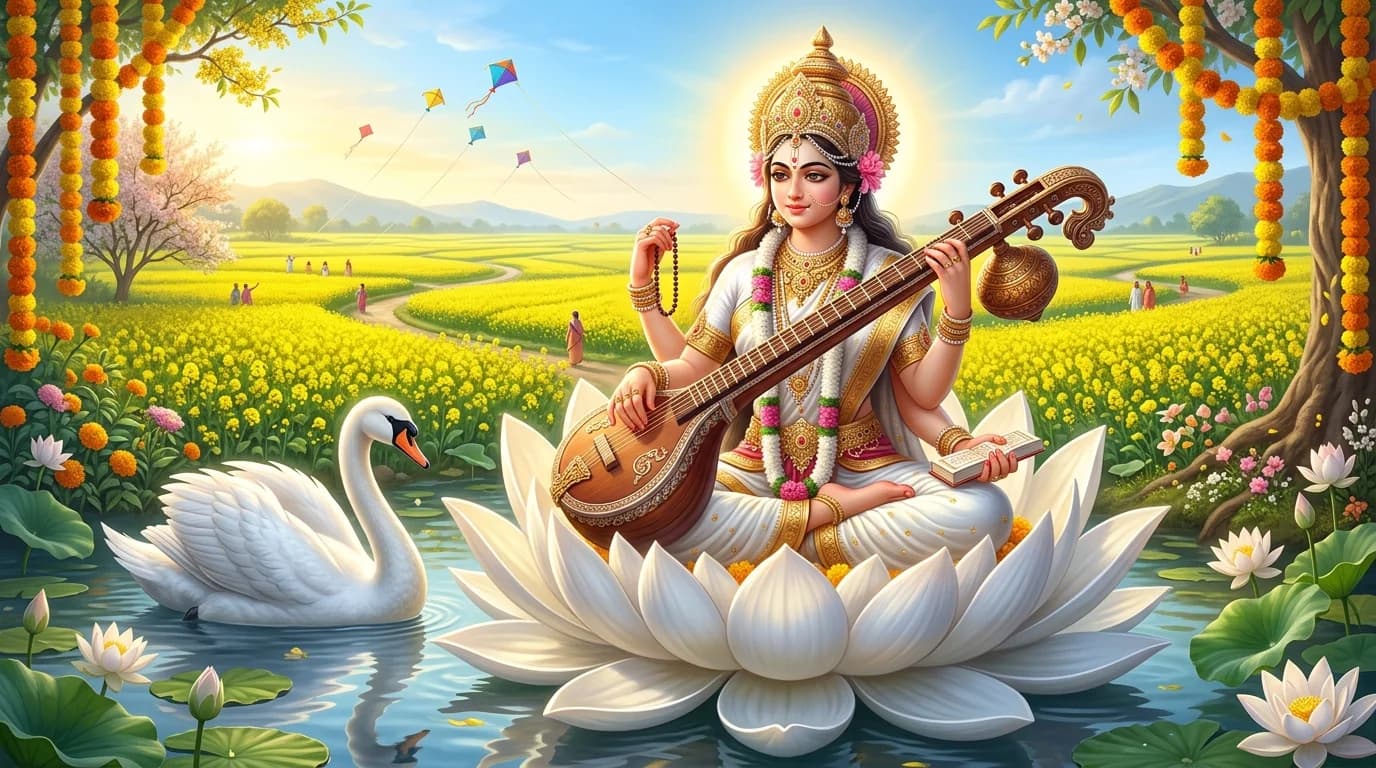
“Ya Kundendu Tushar Hara Dhavala, Ya Shubhra Vastravrita. Ya Veena Varadanda Mandita Kara, Ya Shveta Padmasana. Ya Brahma Achyuta Shankara Prabhritibhir Devaih Sada Vandita. Sa Maa Paatu Saraswati Bhagavati Nihshesha Jadya Apaha.” This well-known Saraswati Vandana calls upon the Goddess who is as white as jasmine and snow, dressed in white, holding a veena, seated on a white lotus, and worshipped always by Brahma, Vishnu, and Shiva. May she protect us and remove all our ignorance.A beautiful picture of Goddess Saraswati, dressed in white, sitting on a lotus, holding a veena and a book. Her calm presence shows wisdom, creativity, and inner peace, inspiring everyone who seeks knowledge or art. The yellow colors in the background stand for the joy and renewal of Vasant Panchami.
3. Spiritual Meaning & Significance of Vasant Panchami
Beyond the rituals and celebrations, Vasant Panchami carries deep spiritual lessons for anyone seeking truth and wisdom. It reminds us that real wealth is not in money or things, but in the lasting treasure of knowledge (Jnana) and spiritual insight (Viveka) -- which alone can lead to final freedom (Moksha). Just as spring brings new life to nature, turning bare land into green fields, the honest search for knowledge and truth also refreshes the mind and spirit, opening new ways of thinking, growth, and deeper self-understanding. This sacred day calls us to build not only worldly knowledge (Apara Vidya), which we need for daily life, but also spiritual wisdom (Para Vidya) -- the deeper understanding of what is real and unchanging, how all beings are connected, and our own place in the larger universe. Treating learning as a sacred, lifelong journey, respecting those who teach and guide us, and using our knowledge for the good of others and society -- these are the timeless messages of this sacred day. Vasant Panchami encourages us to leave behind the mental laziness and spiritual stillness of the 'winter' of ignorance, and instead fully welcome the lively, growing energy of learning and spiritual awakening, just like the blooming of spring.
Simple ways to mark Vasant Panchami:
- Do Saraswati Puja: Offer yellow flowers and fruits, light a lamp, and pray for wisdom and a clear mind.
- Start something new: Begin a new book, course, or an old hobby. This day is considered lucky for starting to learn something.
- Do something creative: Spend time on music, art, or writing, honoring Maa Saraswati's gifts.
- Thank your teachers: Show gratitude to teachers and mentors who have guided you with knowledge.
- Wear yellow and share joy: Celebrate the spirit of spring by wearing yellow and spreading positivity.
Puja Samagri Checklist
Puja Samagri Checklist
Essential Items (आवश्यक सामग्री)
Optional Items (ऐच्छिक सामग्री)
Simple Alternatives (सरल विकल्प)
- If fresh flowers are unavailable, offer pure water kalash with sincere devotion.
Practical Do's and Don'ts
What to Do (क्या करें)
- Wake up early and take a morning holy bath.
- Maintain cleanliness in your worship area.
- Pray with family and share Prasad with everyone.
What to Avoid (क्या न करें)
- Avoid wasting food, water, or electric lights.
- Avoid harsh speech or negativity during festival time.
What You Can Do Today
What You Can Do Today
Simple practical actions for immediate blessings