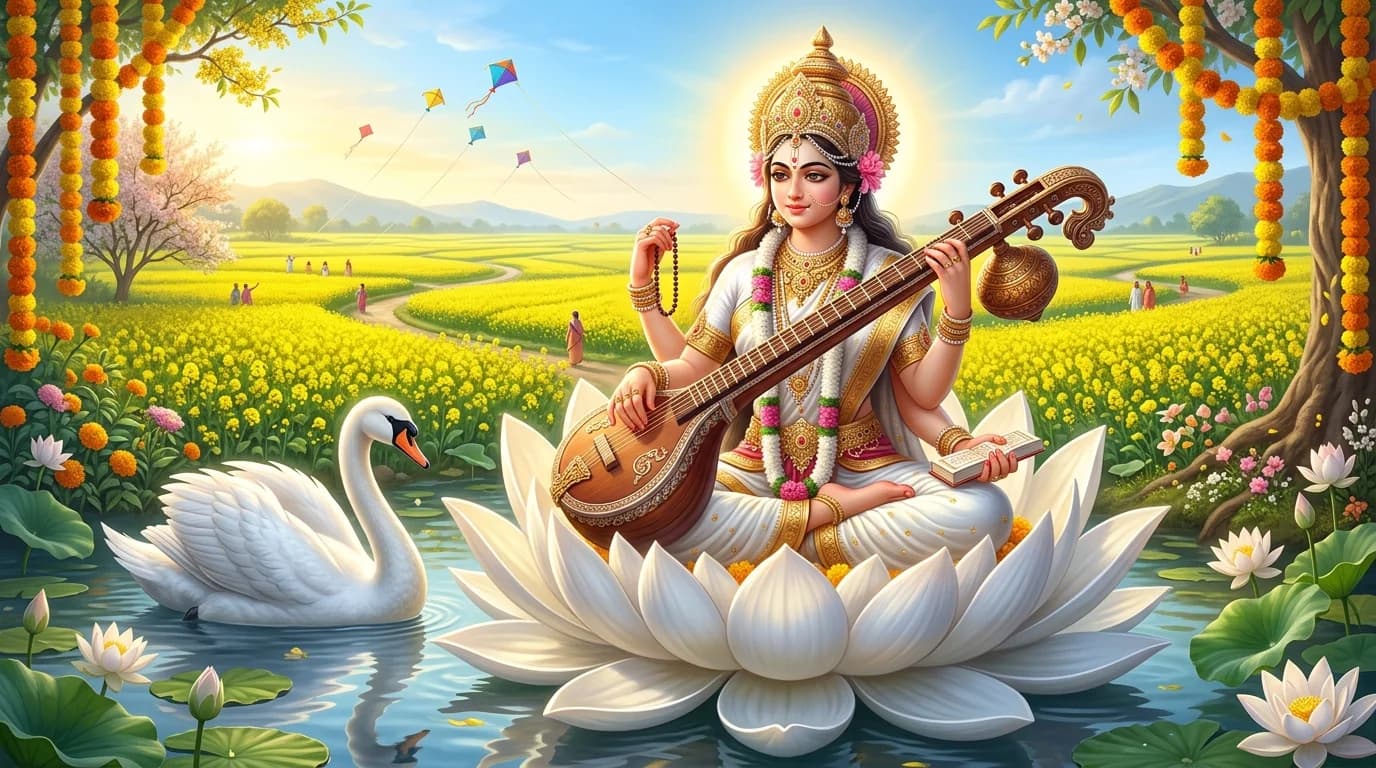
Ratha Saptami: Celebrating the Sun God's Chariot of Life
In This Article (Direct Jump)
Quick Information Card
Ratha Saptami
January 25, 2026
February 4, 2025
Magha Shukla Saptami
05:26 AM to 07:13 AM (Snan Muhurat)
Lord Surya
All India, Andhra Pradesh, Tamil Nadu, Odisha
Health, vitality, inner light, and solar energy
Ratha Saptami
January 25, 2026
February 4, 2025
Magha Shukla Saptami
05:26 AM to 07:13 AM (Snan Muhurat)
Lord Surya
All India, Andhra Pradesh, Tamil Nadu, Odisha
Health, vitality, inner light, and solar energy
1. Introduction to Ratha Saptami
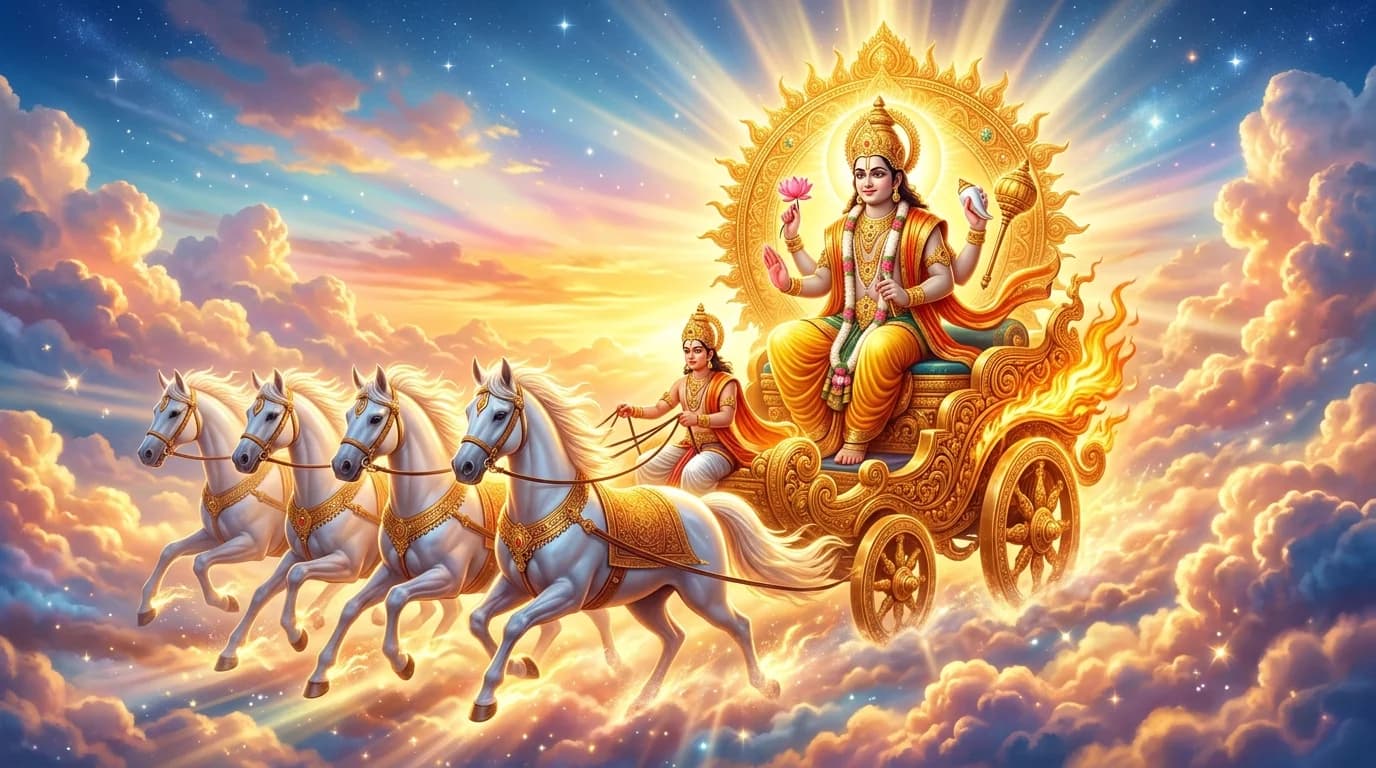
Ratha Saptami is also called Surya Jayanti. It is an important Hindu festival for Surya Dev, the Sun God. It falls on the seventh day (Saptami) of the bright half (Shukla Paksha) of the Hindu month Magha. On this day, we remember how Surya Dev's chariot -- driven by Aruna and pulled by seven horses -- was born, or began its journey, filling the whole world with light. This day is celebrated as Surya Dev's birthday. He is seen as the source of all life, energy, and light on Earth. People believe that worshipping the Sun God on Ratha Saptami brings good health, energy, inner brightness (Tejas), and a long life.
The Vedas praise Surya Dev as the one who removes darkness and gives light. An old verse asks us to meditate on the Sun's divine light: 'Dhyayet Sadaa Savitru-Mandala-Madhya-Vartinam, Naaraayana-Sarasijaasana-Sanni-Vishtam.' It means: 'Always meditate on the One who sits in the middle of the Sun, seated on a lotus -- that is Lord Narayana himself.' This verse shows how much reverence people have for Surya as a form of the Supreme God.2. How to Celebrate Ratha Saptami (Step-by-Step Rituals)
On Ratha Saptami, people wake up early, ideally before sunrise, and take a holy bath. Many bathe in a sacred river, or at home by adding seven Arka leaves and seven Bael leaves to the water -- this is believed to purify the body and take in the Sun's healing energy. After the bath, people offer water (Arghyam) to the rising sun while chanting the Gayatri Mantra or other Surya mantras. They light a lamp and offer flowers, incense, and food (like Kheer or sweet Pongal). A popular custom is to draw a rangoli of the Sun's chariot with seven horses, showing his journey across the sky. Many people also fast, fully or partly, to honor Surya Dev and receive his blessings.
Picture the glowing Surya Dev on his heavenly chariot, pulled by seven powerful horses. This scene stands for light winning over darkness, and the endless flow of life-giving energy. It reminds us how important the Sun is for keeping all life going.
3. Spiritual Meaning & Significance of Ratha Saptami
Ratha Saptami is not just about rituals -- it also has deep spiritual meaning. In Hinduism, the Sun stands for the Atman, or soul -- the source of our inner light and awareness. Its daily path from east to west is like a picture of life, death, and rebirth, and the constant passing of time. Worshipping Surya Dev on this day is not only about physical health -- it is also about asking for mental clarity, clearing away ignorance, and bringing yourself in tune with nature's rhythm. The chariot's seven horses stand for the seven chakras (energy centers in the body), the seven colors of the rainbow, or the seven days of the week -- all showing completeness and the Sun's full effect on our lives. It is a day to look inward, let go of old habits, and welcome the fresh energy the Sun brings, both outside and inside us.
Try these simple ways to welcome Surya Dev's divine energy:
- Start your day with Surya Namaskar. Offer Arghyam (water) to the rising sun and chant 'Om Suryaya Namah' to invite health and energy.
- Sit quietly for a few minutes and think about the sun's warmth and light. Imagine it filling you with positive energy and a clear mind.
- Be thankful for the sun. Remember that it keeps all life on Earth going and lights up our inner self too.
- Get some early morning sunlight in a mindful way -- it is good for both your body and your mind.
- See Surya Dev as a symbol of your own soul (Atman), and try to grow inner brightness and wisdom.
Puja Samagri Checklist
Puja Samagri Checklist
Essential Items (आवश्यक सामग्री)
Optional Items (ऐच्छिक सामग्री)
Simple Alternatives (सरल विकल्प)
- If fresh flowers are unavailable, offer pure water kalash with sincere devotion.
Practical Do's and Don'ts
What to Do (क्या करें)
- Wake up early and take a morning holy bath.
- Maintain cleanliness in your worship area.
- Pray with family and share Prasad with everyone.
What to Avoid (क्या न करें)
- Avoid wasting food, water, or electric lights.
- Avoid harsh speech or negativity during festival time.
What You Can Do Today
What You Can Do Today
Simple practical actions for immediate blessings