The Spiritual Science of Ekadashi Fasting
In This Article (Direct Jump)
Quick Information Card
The Spiritual Science of Ekadashi Fasting
2026 Date
2025 Date
Panchang Tithi
Auspicious Muhurat
Deity
All India
Devotion and spiritual growth
The Spiritual Science of Ekadashi Fasting
2026 Date
2025 Date
Panchang Tithi
Auspicious Muhurat
Deity
All India
Devotion and spiritual growth
1. Introduction to The Spiritual Science of Ekadashi Fasting
Ekadashi is the eleventh day of both the bright (Shukla Paksha) and dark (Krishna Paksha) fortnights of the lunar month. In the Hindu calendar, this day is traditionally dedicated to Lord Vishnu and is marked by fasting (Vrat) and meditation. Scriptures state that observing Ekadashi cleanses bad karmas, purifies the mind, and draws the soul closer to the supreme consciousness.
"न हि उपवासात् परमं किञ्चित् त्रिषु लोकेषु विद्यते।" (There is no austerity greater than fasting in all the three worlds.)2. How to Celebrate The Spiritual Science of Ekadashi Fasting (Step-by-Step Rituals)
The practice has deep biological and scientific reasoning. Astrologically, the gravitational pull of the moon influences the water levels on Earth and similarly affects the water content in our bodies. Fasting during this time reduces the fluid pressure in the brain and digestive tract. Biologically, fasting twice a month triggers 'autophagy' — a Nobel Prize-winning scientific concept where cells clear out damaged parts, bacteria, and toxins, essentially renewing the body.
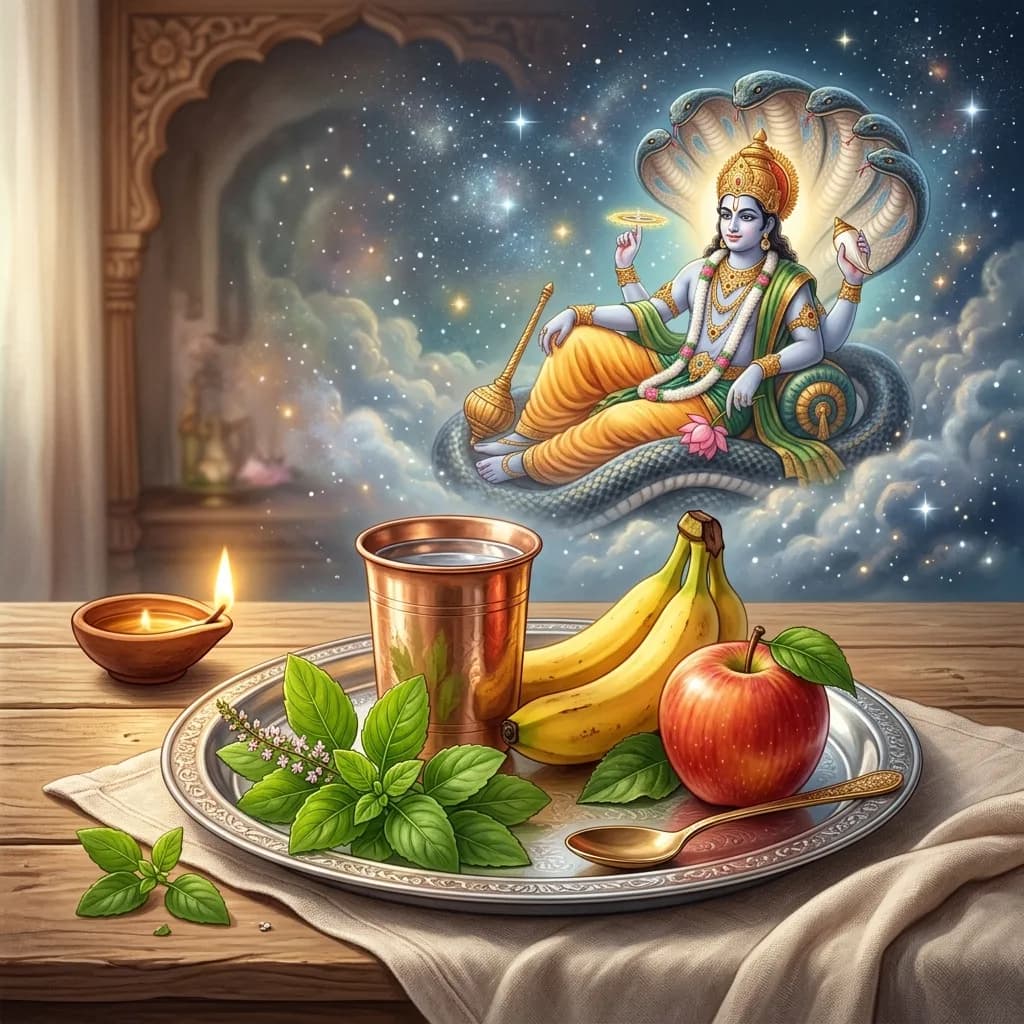
A pure and sattvic plate prepared for Ekadashi fasting.
3. Spiritual Meaning & Significance of The Spiritual Science of Ekadashi Fasting
Traditional Ekadashi fasting rules prohibit the consumption of grains, rice, and beans, as they absorb high amounts of water and can disrupt the body's natural balance on this day. Instead, people consume fresh fruits, milk, water, and water-retaining foods in moderation. The goal is to spend less energy digesting heavy foods and redirect that energy inwards for meditation and chanting.
Practical Guide to Ekadashi Fasting
- Choose your level: You can fast with water only (Nirjala), fruit and milk only (Phalahar), or single sattvic meal without grains.
- Avoid grains: Completely avoid wheat, rice, corn, lentils, and beans on this day.
- Sattvic Mind: Keep your thoughts clean; avoid anger, gossiping, and negative emotions. Devote time to reading scripture.
- Parana (Breaking the fast): Break the fast on the next day (Dwadashi) during the specific timing (Parana time) with simple water and light grains.
Puja Samagri Checklist
Puja Samagri Checklist
Essential Items (आवश्यक सामग्री)
Optional Items (ऐच्छिक सामग्री)
Simple Alternatives (सरल विकल्प)
- If fresh flowers are unavailable, offer pure water kalash with sincere devotion.
Practical Do's and Don'ts
What to Do (क्या करें)
- Wake up early and take a morning holy bath.
- Maintain cleanliness in your worship area.
- Pray with family and share Prasad with everyone.
What to Avoid (क्या न करें)
- Avoid wasting food, water, or electric lights.
- Avoid harsh speech or negativity during festival time.
What You Can Do Today
What You Can Do Today
Simple practical actions for immediate blessings