Govardhan Puja & Annakut: Celebrating Devotion and Divine Abundance
In This Article (Direct Jump)
Quick Information Card
Govardhan Puja (Annakut)
November 10, 2026
October 22, 2025
Kartik Shukla Pratipada
06:40 AM to 08:48 AM
Lord Krishna & Govardhan Parvat
Mathura, Vrindavan, All India
Nature gratitude and Annakut offering
Govardhan Puja (Annakut)
November 10, 2026
October 22, 2025
Kartik Shukla Pratipada
06:40 AM to 08:48 AM
Lord Krishna & Govardhan Parvat
Mathura, Vrindavan, All India
Nature gratitude and Annakut offering
1. Introduction to Govardhan Puja (Annakut)
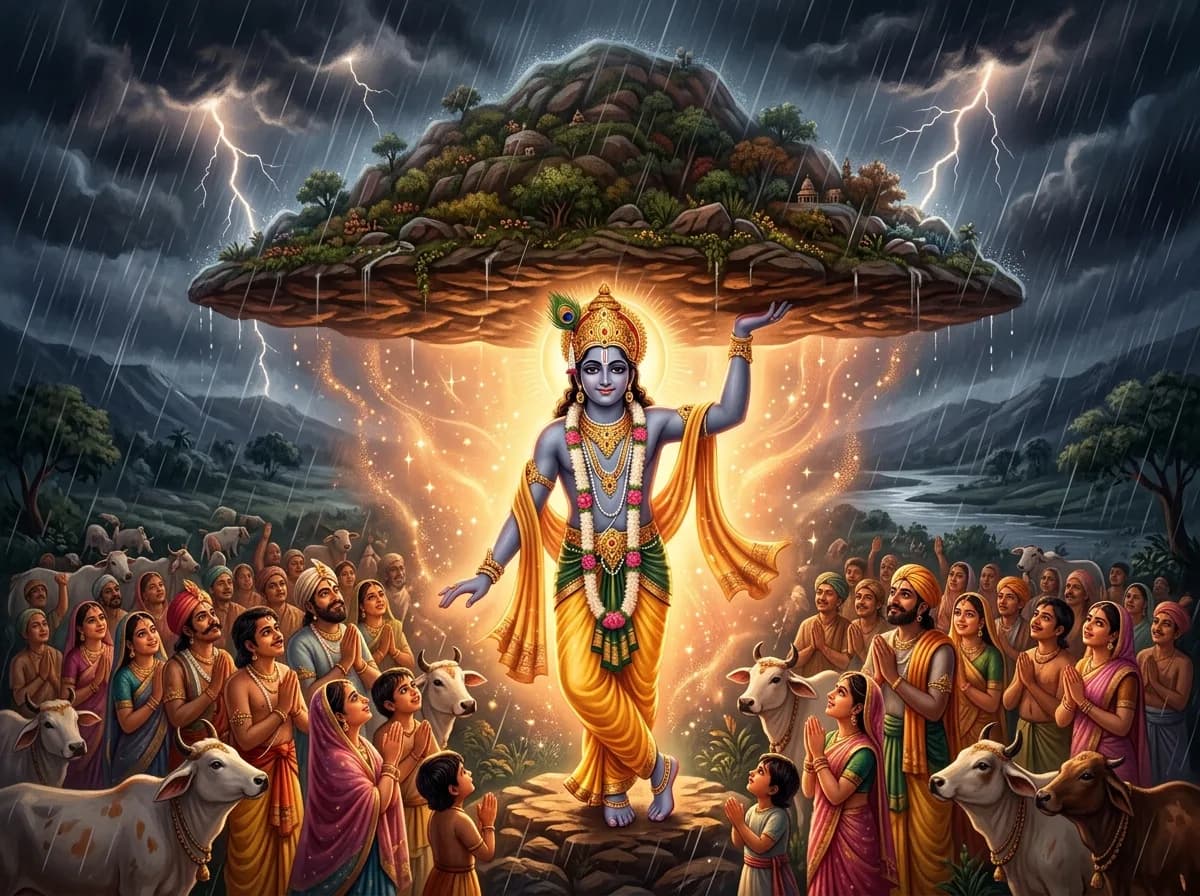
Govardhan Puja, celebrated on the day after Diwali, reveres Lord Krishna as Giridhari, the lifter of the Govardhan Hill. The Puranic narrative tells of how the residents of Vrindavan, following a long-standing tradition, prepared to worship Lord Indra, the god of rain and thunderstorms, hoping for good rains and crops. However, the young Krishna, with His divine wisdom, questioned this practice. He argued that it was Govardhan Hill and the cows that truly sustained their lives, providing pastures and resources, and therefore, they should worship the hill instead. Convinced by Krishna's words, the villagers offered their devotions to Govardhan Hill. Enraged by this slight, Indra unleashed torrential rains upon Vrindavan, intending to drown the entire village. To protect His beloved devotees and cattle, Lord Krishna, merely a seven-year-old boy, effortlessly lifted the massive Govardhan Hill with His left pinky finger, holding it aloft for seven days and seven nights as a gigantic umbrella. The villagers and animals took refuge beneath it, safe from Indra's wrath. Indra eventually realized his folly and Krishna's divine supremacy, bowing down in submission. This momentous event established the principle of sincere devotion over ritualistic blind faith and highlighted the Lord's promise to always protect His devotees.
Gurudev! The supreme Personality of Godhead, who is the protector of the cows and brahminical culture, has appeared in Your village as a cowherd boy. O King, worship the cows, brahmins, and Govardhan Hill. (Srimad Bhagavatam 10.24.28, part) <br/> _Govardhana dharaṁ vande gopālaṁ goparūpiṇam, Gokulotsavam īśānaṁ govindaṁ gokule sthitam._2. How to Celebrate Govardhan Puja (Annakut) (Step-by-Step Rituals)
Following the Govardhan Puja, the festival of Annakut, meaning 'a mountain of food', is celebrated. This tradition originated from the offering made by the villagers to Govardhan Hill as instructed by Krishna. After the incident, the overjoyed devotees prepared a grand feast with all types of food they had, offering it to Lord Krishna as a mark of their gratitude and devotion. Today, Annakut involves preparing a vast variety of vegetarian dishes – sometimes numbering 56 (Chappan Bhog) – including sweets, savouries, curries, and rice preparations, which are then artistically arranged to resemble a small hill. This mountain of food is offered to Lord Krishna, symbolizing the abundance of nature and the farmer's toil, and is later distributed as prasadam to all devotees. It's a vibrant celebration of community, sharing, and the divine blessing of sustenance.
A magnificent depiction of the Annakut ceremony, where devotees arrange a mountain of diverse vegetarian delicacies as an offering to Lord Krishna, symbolizing gratitude, devotion, and the bountiful blessings of nature.
3. Spiritual Meaning & Significance of Govardhan Puja (Annakut)
Beyond the vibrant rituals, Govardhan Puja and Annakut offer profound spiritual lessons. Firstly, it emphasizes the importance of protecting and honoring nature – the very source of our sustenance, represented by Govardhan Hill. Secondly, it teaches humility and the rejection of false pride (as seen in Indra's defeat), reminding us that true power lies in divine grace and not in material possessions or positions. Thirdly, it reinforces unwavering faith in the Supreme Lord; Krishna protected His devotees who surrendered completely. Lastly, the Annakut tradition highlights the principle of 'Yajna' – offering our best to the divine before partaking, cultivating a spirit of gratitude and selfless sharing within the community. It's a call to simple, sincere devotion that brings direct connection with the divine.
Embracing the Spirit of Govardhan Puja
- Cultivate gratitude for nature: Acknowledge and respect the natural resources that sustain us, much like Govardhan Hill. Plant a tree or participate in local clean-up drives.
- Practice humility: Reflect on areas where ego might be hindering your spiritual growth and strive for genuine humility, surrendering to a higher power.
- Offer your best with devotion: Whether in daily tasks or special prayers, perform everything with a spirit of offering and sincere devotion, like the Annakut offering.
- Foster community and sharing: Share your blessings with others, contributing to a sense of togetherness and collective well-being, embodying the spirit of Annakut distribution.
Puja Samagri Checklist
Puja Samagri Checklist
Essential Items (आवश्यक सामग्री)
Optional Items (ऐच्छिक सामग्री)
Simple Alternatives (सरल विकल्प)
- If fresh flowers are unavailable, offer pure water kalash with sincere devotion.
Practical Do's and Don'ts
What to Do (क्या करें)
- Wake up early and take a morning holy bath.
- Maintain cleanliness in your worship area.
- Pray with family and share Prasad with everyone.
What to Avoid (क्या न करें)
- Avoid wasting food, water, or electric lights.
- Avoid harsh speech or negativity during festival time.
What You Can Do Today
What You Can Do Today
Simple practical actions for immediate blessings