Durga Ashtami (Maha Ashtami): The Pinnacle of Divine Feminine Power
In This Article (Direct Jump)
Quick Information Card
Durga Ashtami (Maha Ashtami)
October 18, 2026
September 30, 2025
Ashvin Shukla Ashtami
Sandhi Puja: 01:45 PM to 02:33 PM
Maa Mahagauri & Durga
All India, Bengal, Bihar
Sandhi Puja and Shakti invocation
Durga Ashtami (Maha Ashtami)
October 18, 2026
September 30, 2025
Ashvin Shukla Ashtami
Sandhi Puja: 01:45 PM to 02:33 PM
Maa Mahagauri & Durga
All India, Bengal, Bihar
Sandhi Puja and Shakti invocation
1. Introduction to Durga Ashtami (Maha Ashtami)
Durga Ashtami, falling on the eighth day of Navratri, is reverently known as Maha Ashtami, signifying its immense spiritual importance. This day is a culmination of devotion, energy, and celebration of the divine feminine (Shakti). It is primarily dedicated to Maa Mahagauri, the eighth form of Goddess Durga, who represents purity, serenity, and compassion. Her worship on this day is believed to cleanse sins and fulfill desires, bringing immense peace and prosperity to devotees. Maha Ashtami is a powerful reminder of the omnipresent divine energy that protects and nurtures the universe.
2. How to Celebrate Durga Ashtami (Maha Ashtami) (Step-by-Step Rituals)
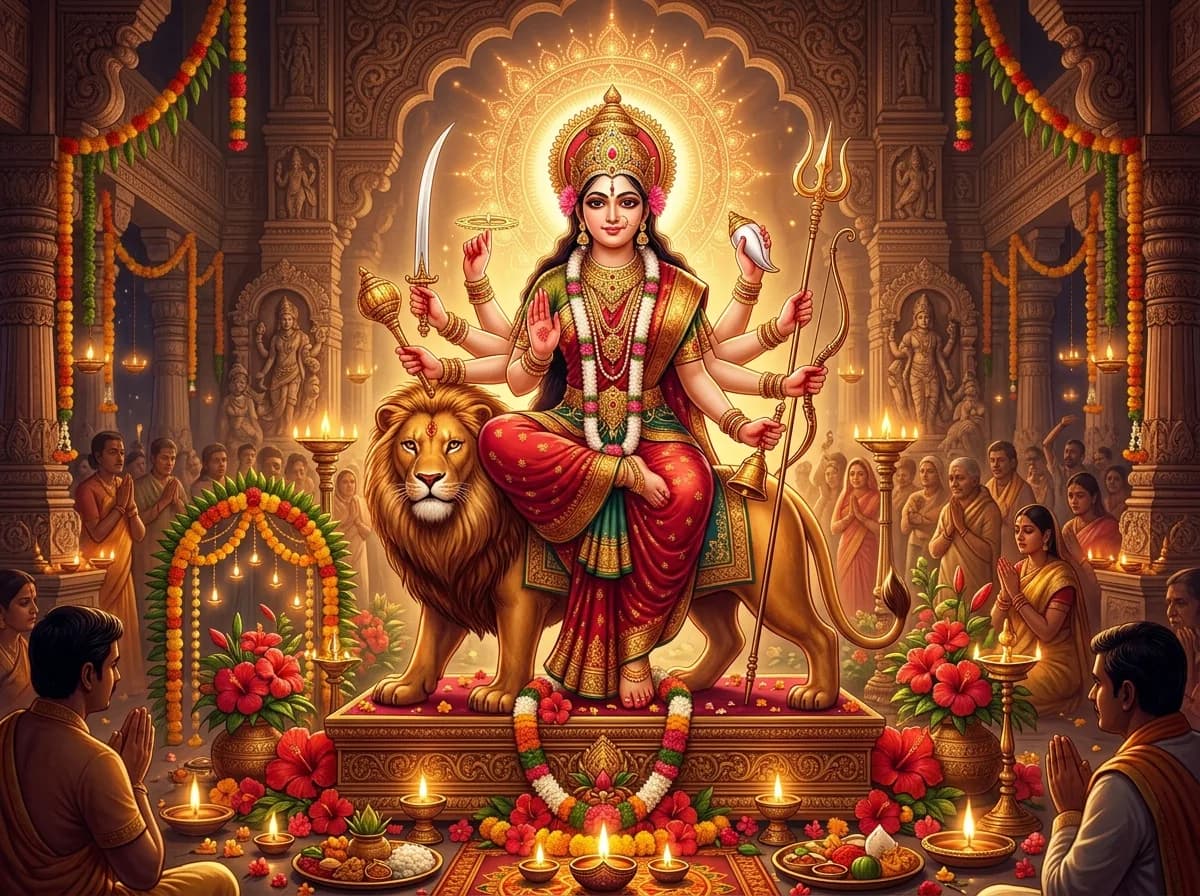
Maa Mahagauri, with her pristine white complexion, symbolizing purity and calmness, rides a bull (Nandi). She holds a trident in one hand and a drum in the other, radiating peace and fearlessness. Her form signifies the triumph of good over evil and the removal of all suffering. It is believed that by worshipping Mahagauri, devotees can attain both material and spiritual liberation. Her tapasya (austerities) turned her dark, but Shiva purified her with Ganga's water, restoring her fair complexion, hence 'Mahagauri' (greatly fair). This symbolizes spiritual cleansing and transformation, where inner purity is attained through devotion and sacrifice.
सर्वमंगल मांगल्ये शिवे सर्वार्थ साधिके। शरण्ये त्र्यम्बके गौरि नारायणि नमोऽस्तु ते॥ (Sarvamangala Mangalye, Shive Sarvartha Sadhike. Sharanye Tryambake Gauri, Narayani Namostute.) Meaning: 'O Gauri, Narayani, the auspiciousness of all that is auspicious, the benevolent one who fulfills all objectives, the refuge of all, the three-eyed one, salutations to you.'A beautiful depiction of Maa Mahagauri, radiating peace and purity, seated on her bull vahan, holding her divine weapons. This image encapsulates the serene yet powerful essence of the eighth manifestation of Goddess Durga, inspiring devotion and inner strength.
3. Spiritual Meaning & Significance of Durga Ashtami (Maha Ashtami)
Two pivotal rituals characterize Maha Ashtami: Sandhi Puja and Kanya Pujan. Sandhi Puja is performed at the auspicious juncture (Sandhi) when Ashtami tithi ends and Navami tithi begins. This period, lasting for 48 minutes, is considered highly potent and is dedicated to worshipping Goddess Chamunda, a fierce form of Durga. It symbolizes the transition of energies and the ultimate victory of good over evil. Kanya Pujan, or Kanjak, involves worshipping nine young girls (symbolizing the nine forms of Durga) and a boy (symbolizing Batuk Bhairav). Their feet are washed, kumkum and tilak are applied, and they are offered food (puri, chana, halwa) and gifts. This ritual reinforces the belief that the divine feminine resides in every woman and girl, teaching humility, respect, and unconditional love.
Embrace the spiritual essence of Durga Ashtami with these practices:
- Observe a fast (if possible) or consume sattvic food to purify your body and mind.
- Participate in Sandhi Puja to honor the transitional divine energies and seek blessings for protection.
- Perform Kanya Pujan with utmost reverence, recognizing the Goddess in young girls, and offer them food and gifts.
- Meditate on Maa Mahagauri's form, praying for purity, peace, and fearlessness in your life.
- Recite Durga Saptashati or Devi Mahatmyam to invoke the powerful energies of the Goddess.
Puja Samagri Checklist
Puja Samagri Checklist
Essential Items (आवश्यक सामग्री)
Optional Items (ऐच्छिक सामग्री)
Simple Alternatives (सरल विकल्प)
- If fresh flowers are unavailable, offer pure water kalash with sincere devotion.
Practical Do's and Don'ts
What to Do (क्या करें)
- Wake up early and take a morning holy bath.
- Maintain cleanliness in your worship area.
- Pray with family and share Prasad with everyone.
What to Avoid (क्या न करें)
- Avoid wasting food, water, or electric lights.
- Avoid harsh speech or negativity during festival time.
What You Can Do Today
What You Can Do Today
Simple practical actions for immediate blessings